


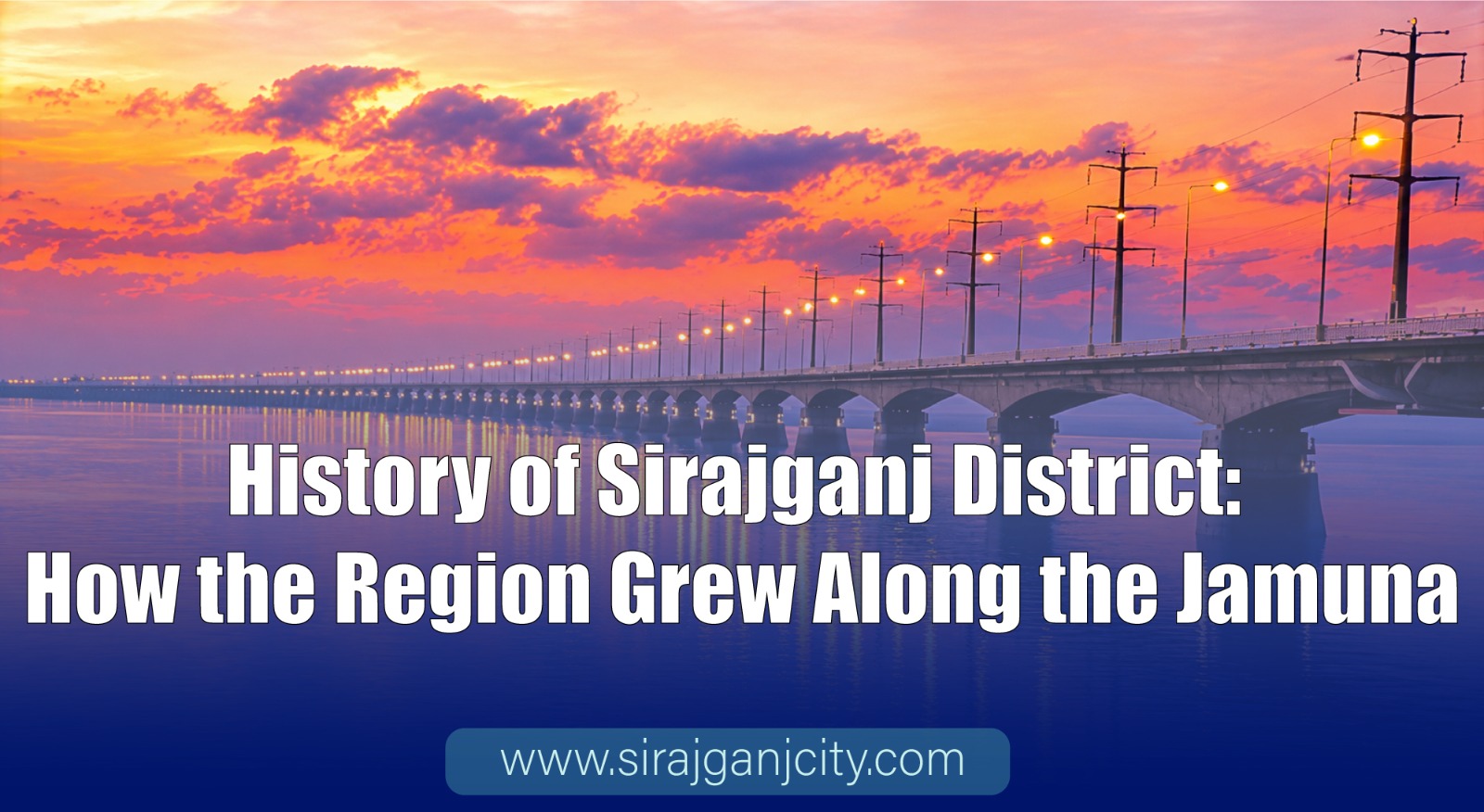
History of Sirajganj District: How the Region Grew Along the Jamuna
23 Sep 2026 By -ফটো কার্ড ডাউনলোড করুন
History of Sirajganj District: How the Region Grew Along the Jamuna
The history of Sirajganj district is closely tied to the Jamuna River, which shaped the area's economy, settlements, and trade routes for centuries. From its rise as a major jute trading center during British rule to its zamindari-era estates, historic mosques, and temples, Sirajganj carries a layered past that is still visible in its landmarks today.
In this article, you will learn how Sirajganj developed as a riverside trading town, what shaped its colonial and zamindari history, and which surviving sites still reflect that history today.
The Riverside Origins of Sirajganj
Sirajganj sits on the bank of the Jamuna River, one of the major channels of the Brahmaputra as it flows through Bangladesh. This location made the town an important river port long before roads and bridges connected the region to the rest of the country. Boats and steamers used the river as the main route for moving goods and people, and the town's position on the riverbank made it a natural stopping point for trade heading toward the country's interior.
Because of this river access, Sirajganj grew into one of the most significant jute trading centers in northern Bengal during the nineteenth century. Jute grown across the surrounding plains was collected, processed, and shipped from Sirajganj, and the town was formally established as a municipality in 1869. Several of the region's earliest jute processing mills were set up here, making Sirajganj an early industrial hub for the jute trade in the wider Bengal area.
The Colonial and Jute Trade Era
During British colonial rule, Sirajganj functioned as a key river mart, with steamer services connecting it to railway terminals further south. Jute merchants and processing houses operated along the riverfront, and the town's economy depended heavily on the seasonal jute trade. This period also brought early institutions, trading houses, and infrastructure that shaped the town's layout.
The jute trade slowed significantly after a major regional earthquake in the late nineteenth century disrupted mill operations, and the industry gradually declined over the following decades. Even so, this era left a lasting mark on Sirajganj's identity as a historic trading town, and remnants of that period can still be traced in the town's older architecture and river-facing structures.
Zamindari Heritage in Shahjadpur
One of the richest parts of Sirajganj's history comes from its zamindari-era estates, particularly in Shahjadpur upazila. This area was once managed as part of a zamindari (landlord) estate connected to the Tagore family, and Rabindranath Tagore himself spent time here overseeing the family's holdings. The estate office used during that period has been preserved, and visiting Rabindra Kacharibari in Shahjadpur gives a direct look at this chapter of the district's history, including artifacts and records connected to Tagore's time in the region.
Nearby, Rautara Zamindar Bari reflects a separate zamindari estate from the same broader era, showing the architectural style typical of landlord households in the region. Together, these sites give a picture of how land ownership and rural administration were organized in Sirajganj before independence.
Historic Religious and Architectural Landmarks
Sirajganj's religious sites also carry significant historical weight, some dating back generations before the colonial period. The Nabagram Shahi Mosque in Tarash reflects older regional mosque architecture, while Shah Mokhdum Majar in Shahjadpur has long held spiritual significance for local communities. Readers interested in the district's wider religious heritage can also browse the site's famous mosques of Sirajganj category for more historic sites.
Hindu temple architecture is also part of this heritage. The Nabaratna Mandir in Ullapara, known for its nine-spire design, and the Potajia Mandir in Shahjadpur are two examples of historic temple construction that have survived in the district.
Engineering Landmarks and Modern History
Sirajganj's more recent history is defined by major infrastructure projects that reshaped the district's connectivity. The Jamuna Bridge, formally known as the Bangabandhu Bridge, opened in 1998 as one of the largest bridges in South Asia, connecting Sirajganj to the rest of the country and marking a turning point in the district's accessibility. Background on this landmark is available on the history of the Jamuna Bridge page.
An older structure, the Elliot Bridge, locally known as Boro Pul, dates back to the British colonial period and represents an earlier phase of infrastructure development in Sirajganj Sadar, well before the modern bridge was built.
Chalan Beel and the District's Natural History
No account of Sirajganj's history is complete without Chalan Beel, one of the largest wetlands in Bangladesh, which stretches across parts of the district including Tarash. Chalan Beel has shaped the region's economy and settlement patterns for centuries through seasonal fishing, agriculture, and water-based transport. A detailed account is available on the history of Chalan Beel page, which covers how the wetland has influenced local life over time.
Things to Know About Sirajganj's History
The river shaped everything: Sirajganj's growth as a trading town is directly tied to its position on the Jamuna River.
Jute was the foundation of its economy: The district's early significance came from jute processing and trade, not tourism or agriculture alone.
Zamindari estates still stand: Sites like Rautara Zamindar Bari and Rabindra Kacharibari preserve physical evidence of the pre-independence landholding system.
Religious sites predate colonial infrastructure: Several mosques and temples in the district are older than the bridges and roads that now connect it to the rest of the country.
The Jamuna Bridge changed everything in 1998: Its completion marked a major shift from river-dependent access to modern road and rail connectivity.
Wetlands are part of the historical record too: Chalan Beel's history is closely tied to how communities in Sirajganj have lived and worked for generations.
Many historic sites are spread across upazilas: Shahjadpur, Tarash, and Ullapara each hold distinct pieces of the district's history, so a single visit rarely covers everything.
Frequently Asked Questions
When was Sirajganj established as a municipality? Sirajganj was constituted as a municipality in 1869, during the period when it was developing into a major river-based trading town.
Why was Sirajganj historically important? Sirajganj was historically important as a leading jute collection and trading center in northern Bengal, with its riverside location making it a key stop for steamer traffic and goods moving through the region.
What is the connection between Sirajganj and Rabindranath Tagore? Rabindranath Tagore managed his family's zamindari estate in Shahjadpur, within Sirajganj district, and the estate office he used has been preserved as Rabindra Kacharibari, now open as a heritage site.
When was the Jamuna Bridge built? The Jamuna Bridge, also known as the Bangabandhu Bridge, was completed in 1998 and remains one of the district's most significant modern landmarks.
Are there historic religious sites in Sirajganj? Yes, Sirajganj has several historic mosques and temples, including Nabagram Shahi Mosque, Shah Mokhdum Majar, Nabaratna Mandir, and Potajia Mandir, each reflecting different periods and communities in the district's history.
Conclusion
The history of Sirajganj district reflects centuries of change shaped by the Jamuna River, from its rise as a jute trading hub during colonial rule to its zamindari-era estates and historic religious sites. Landmarks like Rabindra Kacharibari, Rautara Zamindar Bari, and the district's mosques and temples continue to preserve this history, while modern infrastructure like the Jamuna Bridge marks a newer chapter in the district's story. Together, these layers of history make Sirajganj a district worth understanding beyond its present-day role as a travel destination.
Tags:
No tags available


